
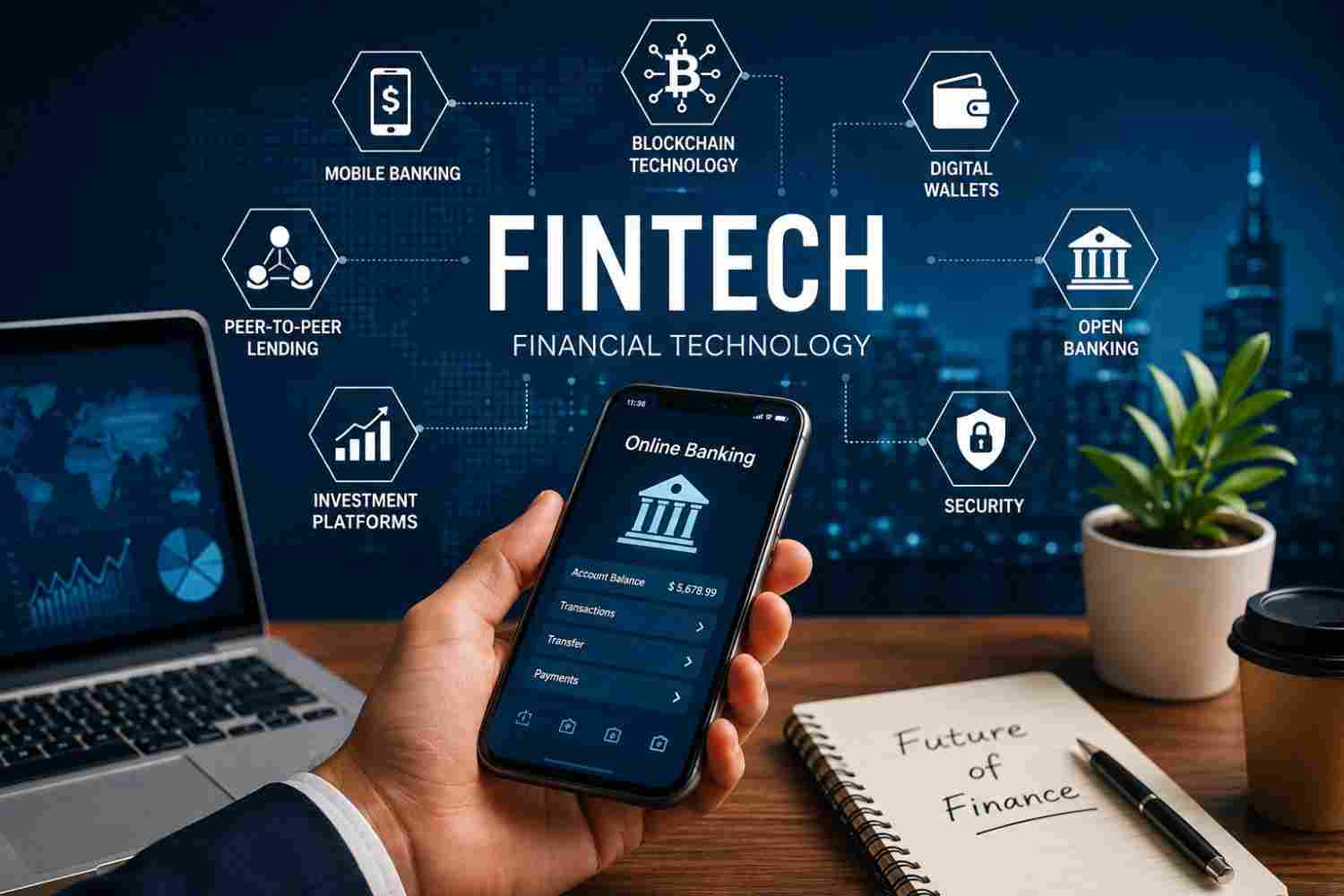
Your bank app now catches fraud before you do. Your grocery store lets you “buy now, pay later” at checkout. And somewhere in Brazil, a payment just settled in under three seconds — for free. Welcome to finance in 2026, where the biggest changes aren’t happening in boardrooms. They’re happening in your pocket.
Fintech isn’t a niche industry anymore. It’s the invisible engine behind how billions of people borrow, save, spend, and move money. And in 2026, that engine is shifting gears faster than ever. Below are the 10 trends actually reshaping finance this year — with real examples, not just buzzwords.
1. AI Agents Are Running the Back Office
For years, AI in banking meant a chatbot that could reset your password. That’s over. In 2026, banks and fin tech firms are deploying AI “agents” — software that doesn’t just answer questions but actually completes tasks: reconciling accounts, flagging suspicious transactions, FinTech drafting compliance reports, and routing customer disputes without a human touching them first.
This matters because financial institutions run on paperwork and repetitive checks. A single AI agent can now handle work that used to require a small team, and it does it around the clock.
What this looks like in practice:
- Banks using AI to pre-fill loan applications based on a customer’s existing account history
- Insurance companies using AI agents to process simple claims in minutes instead of weeks
- Wealth managers using AI to generate personalized portfolio reviews for thousands of clients at once, something only ultra-wealthy clients used to get from a human advisor
The catch? These systems need serious guardrails. A bank can’t let an AI agent make a lending decision it can’t explain to a regulator, so 2026’s real innovation is in building AI that’s both powerful and auditable.
2. Fraud Detection Has Become an AI Arms Race
Here’s an uncomfortable truth: scammers are using AI too. Deepfake voice calls pretending to be a family member in trouble. AI-generated phishing emails that sound exactly like your bank. Synthetic identities built from stolen data fragments that pass basic verification checks.
So fintech companies are fighting fire with fire. Instead of static rules (“flag any transaction over $5,000”), modern fraud systems now watch behavior patterns in real time — how fast you type, how you hold your phone, FinTech whether your spending suddenly looks nothing like your history.
Why this is a team sport now:
- Banks are sharing anonymized fraud signals with each other through industry networks, so a scam caught at one institution helps protect customers at another
- Payment processors, telecom companies, and banks are teaming up because fraud often starts with a phone call or text, not the transaction itself
- Consumers are being looped in with instant alerts, letting them confirm or kill a suspicious payment within seconds
The result is fraud detection that’s faster and harder to fool — but it also means your bank knows a lot more about your habits than it did five years ago.
3. Real-Time Payments Are the New Normal
Waiting three business days for money to clear is starting to feel as outdated as writing a check. Instant payment rails have gone from experimental to expected in many parts of the world.
Real examples already running at scale:
- India’s UPI system processes billions of transactions a month, FinTech letting anyone send money instantly using just a phone number
- Brazil’s Pix system, launched by the country’s central bank, is now used by the vast majority of adults for everyday purchases
- The U.S. FedNow service is expanding, pushing American banks toward instant transfers instead of the old two-to-three-day wait
- The UK and EU have similarly pushed instant SEPA transfers as the default, not the premium option
For everyday people, this means less waiting around for a paycheck to clear or a refund to land. For businesses, it means better cash flow and fewer disputes over “the payment is still processing.”
4. Stablecoins Move From Speculation to Settlement
A few years ago, stablecoins were mostly a crypto trader’s tool. In 2026, they’re becoming plumbing — the boring, essential infrastructure that moves money between banks, FinTech companies, and countries.
Major payment companies now let businesses settle cross-border payments in dollar-backed stablecoins instead of routing through multiple correspondent banks, which can take days and rack up hidden fees. Some large banks have launched their own tokenized deposit systems to move institutional money faster.
Why businesses care:
- Cross-border payments that took 2–5 days can settle in minutes
- Fees drop significantly because there are fewer middlemen
- Businesses in countries with unstable local currencies use dollar-backed stablecoins to protect cash reserves
Regulation is catching up fast, FinTech with several major economies introducing clearer rules for stablecoin issuers in the past year — a sign this is no longer a fringe experiment.
5. Embedded Finance Is Everywhere (Even If You Don’t Notice It)
Embedded finance means financial services showing up inside apps that aren’t banks. You’ve probably used it without realizing it.
Common examples:
- Buying a couch and getting a “pay in 4 installments” option at checkout, powered by a fintech company, not the furniture store
- Ride-share drivers getting instant access to their earnings through a debit card built into the driver app
- Online stores offering business loans to their own sellers based on sales data the platform already has
This trend is powerful because it removes friction. Instead of leaving an app to apply for a loan or a card at a separate bank, the financial product meets you exactly where you already are. For companies, FinTech it opens a new revenue stream; for consumers, it’s often faster approval because the platform already knows your transaction history.
6. Open Banking Becomes a Baseline Expectation
Open banking lets you securely share your financial data between institutions — for example, letting a budgeting app see your checking account balance, or letting a new bank verify your income instantly instead of asking for pay stubs.
What used to be a selling point (“we support open banking!”) is now simply expected. Customers assume they can connect their accounts across apps the same way they’d connect a social media login.
Practical benefits people are seeing:
- Faster loan approvals because lenders can verify income and spending directly instead of manually reviewing documents
- Budgeting and investing apps that automatically pull data from every account you own into one dashboard
- Easier account switching, since new banks can now verify your history without weeks of paperwork
The next phase, often called “open finance,” is expanding this beyond banking into insurance, pensions, and investments.
7. Real-World Assets Are Getting Tokenized
Tokenization means turning ownership of a real asset — real estate, bonds, even fine art — into a digital token that can be traded more easily. In 2026, this has moved past pilot projects into real money.
Large asset managers have launched tokenized versions of money market funds, letting institutional investors move cash into interest-bearing assets and back out again almost instantly, FinTech something that used to take a full settlement cycle. Real estate platforms are letting investors buy a small digital slice of a commercial property instead of needing hundreds of thousands of dollars upfront.
Why it matters:
- Lower minimum investment amounts, opening assets that used to be for institutions only to regular investors
- Faster settlement times, cutting the multi-day process of traditional securities trading down to minutes
- More liquidity for traditionally hard-to-sell assets like private real estate
This is still early, and regulation varies a lot by country, but the direction is clear.
8. Lending Moves Beyond the Traditional Credit Score
A credit score built mostly on your borrowing history doesn’t capture much about people who’ve never had a credit card, which describes a large share of the world’s population. In 2026, more lenders are using alternative data to make fairer, faster decisions.
What’s being used instead or alongside credit scores:
- Rent and utility payment history
- Cash flow patterns from checking accounts, viewed with the customer’s permission
- Freelance or gig income tracked through payment platforms rather than a traditional employer
This shift is expanding access to credit for younger borrowers, immigrants, and people in developing economies who were previously invisible to traditional lending models. It also lets lenders price risk more accurately, which can mean better rates for responsible FinTech borrowers who just didn’t have a long credit history.
9. Biometrics and Passwordless Security Take Over
Passwords are quietly dying. Fintech apps are leading the shift toward biometric logins — face scans, fingerprints, and voice recognition — paired with device-based security keys that don’t require you to remember (or reuse) a password at all.
This isn’t just about convenience. Passwords get stolen constantly in data breaches, and biometric or device-based authentication is dramatically harder to fake at scale. Combined with AI-driven fraud detection, this is becoming one of the strongest defenses against account takeovers.
What to expect as a user:
- Logging into your banking app with a face scan instead of typing a password
- Confirming large transfers with a fingerprint instead of a text code
- Fewer “forgot password” resets, and fewer accounts hijacked through leaked credentials
Security experts are also pushing “quantum-resistant” encryption as a longer-term project, preparing financial systems for a future where today’s encryption methods could eventually be broken by more powerful computers.
10. Financial Inclusion Is Finally Getting Real Investment
For a long time, “financial inclusion” was a talking point at conferences more than a business priority. That’s changing, because fintech companies have realized that billions of underbanked people represent a massive, underserved market.
Real progress happening now:
- Mobile money services like M-Pesa in Kenya let people without a bank account save, borrow, and pay bills using a basic phone
- Micro-lending apps in Southeast Asia and Africa are approving small business loans in minutes using phone and transaction data instead of paperwork
- Low-cost digital wallets are replacing cash for millions of gig workers and informal traders who previously had no safe way to store money
This trend matters beyond ethics — it’s genuinely good business. Fintech companies that build for underserved markets are finding some of the fastest customer growth in the industry.
What This Means for You
You don’t need to understand blockchain settlement layers to benefit from any of this. Here’s the practical takeaway:
- Expect faster payments, fewer waiting periods, and fewer paper forms
- Expect your bank to know more about your behavior, in exchange for better fraud protection
- Expect more financial products to show up inside apps you already use, not just at your bank
- If you’re an immigrant, FinTech freelancer, or new to credit, expect more lenders to actually be able to say yes to you
Finance in 2026 is becoming faster, more automated, and more embedded in daily life. The trends above aren’t distant predictions — they’re already running in the background of transactions happening right now. The smartest move, whether you’re a consumer or a business owner, is to stay curious about how these tools work, because the fintech that feels cutting-edge today will be the baseline expectation within a year or two.
Frequently Asked Questions
What is the biggest fintech trend in 2026? AI is the trend touching everything else — it’s now embedded in fraud detection, lending decisions, customer service, and back-office operations across nearly every major financial institution, not just fintech startups.
Are stablecoins safe to use? Reputable stablecoins backed by cash or short-term government bonds and subject to regulatory oversight are generally considered low-risk for payments, but not all stablecoins are backed equally. It’s worth checking who issues a stablecoin and what actually backs it before relying on it.
Will real-time payments replace traditional bank transfers? In many countries, they already have for everyday transactions. Traditional multi-day transfers are increasingly reserved for large or international payments where extra verification steps still apply.
How is AI changing loan approvals? AI lets lenders look at a wider range of data, like cash flow patterns and bill payment history, instead of relying only on a traditional credit score. This is helping more people qualify for credit, FinTech especially those without a long credit history.
Is embedded finance safe for consumers? Generally yes, since the financial products are usually backed by licensed banks or fintech partners behind the scenes, even if the customer-facing brand is a retailer or app you already trust. It’s still smart to check who’s actually issuing the loan or card before signing up.