
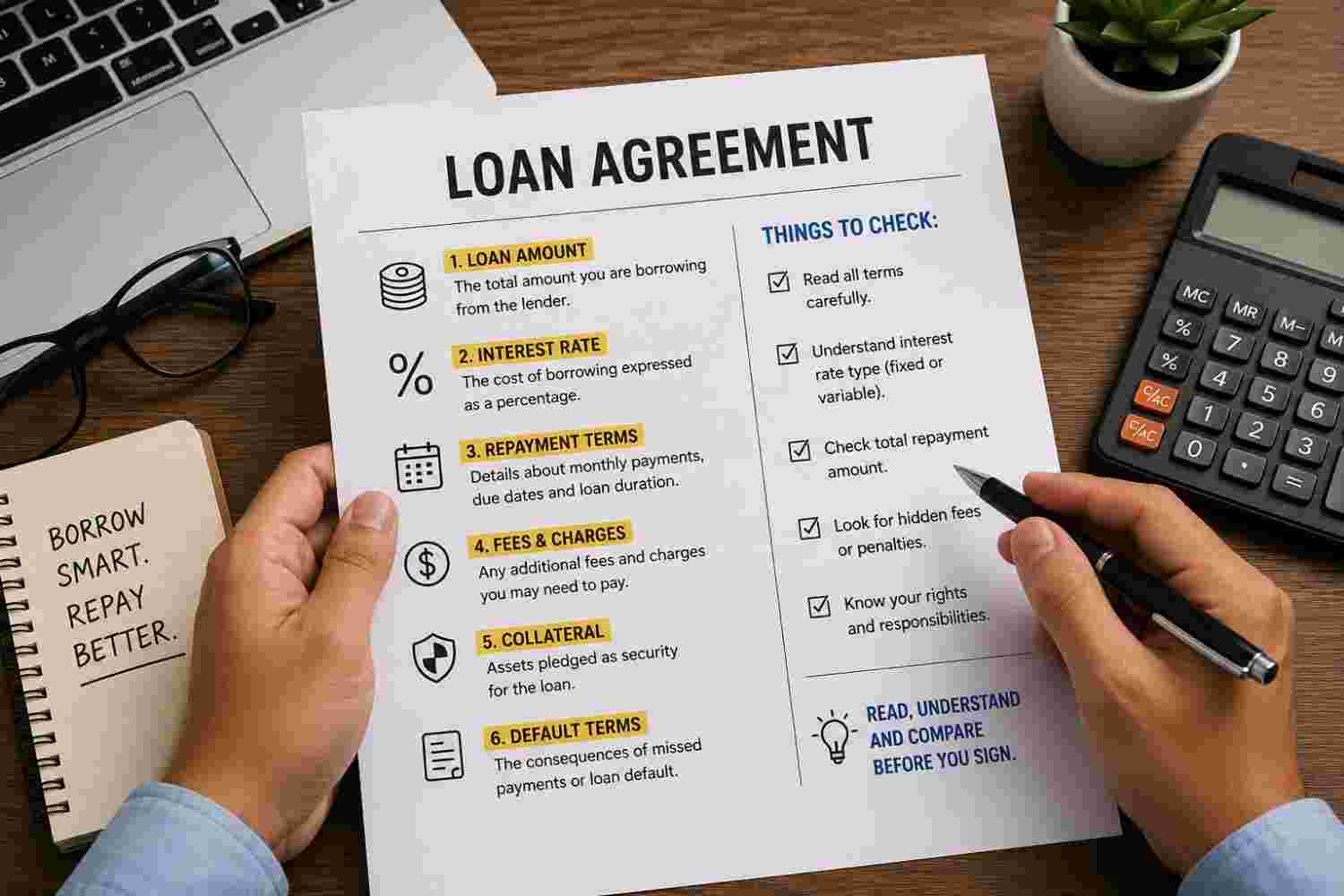
A single unread clause once cost a small business owner in Ohio nearly $4,000 in “prepayment penalties” — just for paying off her loan early. She never saw it coming because she never really read the document. She skimmed it, signed it, and moved on. That’s how most people handle loan agreements, and it’s exactly how people end up trapped by fees, rate hikes, and terms they never agreed to in spirit, even if they agreed to them on paper.
A loan agreement isn’t just a formality standing between you and your money. It’s a legally binding contract that controls what happens to your finances for months or years. Reading it properly — before you sign, not after something goes wrong — is one of the most valuable financial habits you can build.
This guide breaks down exactly what to look for, in plain language, so you can walk into any loan signing with confidence instead of guesswork.
Why Most People Skip Reading Loan Agreements (And Why That’s Risky)
Loan documents are long, dense, and full of legal language on purpose. Lenders aren’t necessarily trying to trick you, but the format itself discourages careful reading. Ten or twenty pages of small print, repeated clauses, and terms like “amortization” or “indemnification” make most people give up and just sign where the sticky note says to.
The problem is that skipping the read-through doesn’t make the terms disappear — it just means you find out about them later, usually at the worst possible time. A missed clause about variable interest rates can turn a $300 monthly payment into $450 two years down the line. A vague default clause can mean your car gets repossessed after a single missed payment instead of the grace period you assumed you had.
Reading the agreement isn’t about distrust. It’s about knowing exactly what you’re committing to, the same way you’d check a used car’s engine before buying it.
Step 1: Confirm the Basic Loan Details First
Before diving into legal clauses, check that the fundamental numbers match what you were told or promised verbally or in an offer letter. Lenders sometimes use standardized templates, and details can get mixed up or misquoted.
Look for:
- Loan amount — the exact figure being lent, not rounded
- Interest rate — and whether it’s fixed or variable
- Loan term — how many months or years you have to repay
- Repayment schedule — monthly, biweekly, or another structure
- Total repayment amount — principal plus all interest over the full term
If any of these numbers don’t match what you agreed to during the application process, stop and ask the lender to explain the discrepancy before going further. This is the easiest place to catch an error, and it’s shockingly common.
Step 2: Understand the Interest Rate Structure
Interest rates aren’t as simple as “5% per year.” How that rate is applied changes how much you actually pay.
Fixed vs. Variable Rates
A fixed rate stays the same for the life of the loan. A variable rate can rise or fall based on a benchmark, like a central bank rate or an index tied to the lender’s own pricing. If your agreement mentions a variable rate, look for how often it can change and whether there’s a cap on how high it can go.
For example, a variable-rate personal loan starting at 6% might include a clause allowing increases of up to 2% per year with no overall ceiling. That means your 6% loan could become an 8% loan within twelve months, and there’s often nothing you can do about it once you’ve signed.
APR vs. Interest Rate
The interest rate and the Annual Percentage Rate (APR) are not the same thing. APR includes the interest rate plus most fees, giving you a more accurate picture of the loan’s true cost. If the interest rate looks appealing but the APR is noticeably higher, Loan Agreement that gap usually means the loan carries hefty fees baked in elsewhere in the contract.
Step 3: Hunt Down Every Fee — They’re Rarely All in One Place
Fees are often scattered across different sections of a loan agreement instead of listed together, Loan Agreement which makes them easy to miss. Search the entire document, not just the summary page, for these common charges:
- Origination fee — a percentage charged just for processing the loan
- Late payment fee — flat amount or percentage charged if you miss a due date
- Prepayment penalty — a fee for paying off the loan faster than scheduled
- Application fee — charged whether or not the loan is approved
- Annual or maintenance fee — a recurring charge just for keeping the loan open
- Returned payment fee — charged if a payment bounces or fails
A prepayment penalty deserves special attention because it contradicts what most people assume: that paying off debt early is always a good thing. Some lenders profit from long-term interest, Loan Agreement so they build in a penalty that can equal several months of interest if you try to close out the loan ahead of schedule.
Step 4: Read the Default and Late Payment Clauses Carefully
This section tells you exactly what happens if you miss a payment or fall behind, and it’s often the most consequential part of the entire agreement.
Pay close attention to:
- Grace period — how many days after the due date before a payment is officially “late”
- Default trigger — how many missed payments before the loan is considered in default
- Acceleration clause — a clause allowing the lender to demand the entire remaining balance immediately after a default, rather than letting you catch up gradually
- Collateral seizure terms — for secured loans, exactly what property can be repossessed and under what conditions
An acceleration clause is worth flagging specifically. Without one, missing a payment might mean a late fee and a stern letter. With one, missing a single payment could legally require you to pay off the entire remaining loan balance at once — something few borrowers could actually do on short notice.
Step 5: Look for Automatic Renewal or Rollover Terms
Some short-term loans, especially payday-style or certain business lines of credit, include clauses that automatically renew or “roll over” the loan if it isn’t paid off by the due date. Each rollover often adds new fees and interest, Loan Agreement compounding the original debt quickly.
If you see language like “automatically renews” or “extended term unless otherwise notified in writing,” find out exactly how and when you’d need to cancel or opt out, and whether there’s a deadline for doing so.
Step 6: Check for Mandatory Arbitration or Waived Rights
Buried in the final pages, many loan agreements include a clause requiring disputes to go through private arbitration instead of a courtroom. This Loan Agreement can limit your ability to join a class-action lawsuit or seek certain legal remedies if something goes wrong later.
This clause isn’t necessarily a dealbreaker — it’s common across many financial products — but you should know it’s there. If you’re uncomfortable with it, some lenders allow you to opt out within a short window (often 30 to 60 days) by sending a written notice, so check if that option exists.
Step 7: Compare the Document to What You Were Told Verbally
It’s common for a loan officer or online chat agent to describe terms slightly differently than what appears in the final contract, not always out of dishonesty, but because verbal summaries simplify complex terms. The written agreement is what’s legally enforceable, not the conversation that led up to it.
Before signing, go line by line and confirm the paperwork actually reflects:
- The rate you were quoted
- Any promotional periods (like “0% interest for 12 months”) and exactly when they end
- Any fees you were told would be waived
If something was promised verbally but doesn’t appear in writing, Loan Agreement ask for it to be added as an amendment before you sign. A verbal promise means nothing once you’ve put your signature on a document that says otherwise.
Quick Pre-Signing Checklist
Use this before signing any loan agreement:
- Loan amount, rate, and term match what was discussed
- You know if the rate is fixed or variable, and by how much it can change
- All fees are identified, including prepayment penalties
- You understand the grace period and what counts as default
- You’ve checked for automatic renewal or rollover clauses
- You know whether arbitration is mandatory and if you can opt out
- Every verbal promise appears in writing
If you can’t check every box, ask the lender directly before signing. A reputable lender will answer clearly; a hesitant or vague answer is itself a red flag.
When to Get a Second Opinion
Not every loan needs a lawyer, but larger loans — mortgages, business loans, or anything involving collateral like your home or vehicle — are worth a professional review. A financial advisor, Loan Agreement credit counselor, or attorney can often spot problematic clauses in under an hour, and many community organizations offer free or low-cost review services for exactly this purpose. The cost of an hour’s consultation is almost always smaller than the cost of an unfavorable clause you missed.
Final Thoughts
Reading a loan agreement carefully isn’t about being paranoid — it’s about being informed. Lenders write these documents to protect their own interests, which is completely normal for a business. Your job is to make sure your interests are protected too, and the only way to do that is to actually read what you’re signing, section by section, before your name goes on the page.
Take your time. Ask questions. Request clarification in writing. A loan is a long-term relationship with a lender, Loan Agreement and understanding the fine print from day one is what keeps that relationship from turning into a financial headache down the road.
Frequently Asked Questions
What’s the most important part of a loan agreement to read? The interest rate structure and the default/late payment clauses matter most. These two sections determine how much you’ll actually pay and what happens if your financial situation changes unexpectedly.
Can I negotiate the terms of a loan agreement before signing? Yes, in many cases. Fees, rates, and even certain clauses like prepayment penalties can sometimes be negotiated, especially with banks, credit unions, or private lenders. It’s less common with large institutional lenders using standardized contracts, but it never hurts to ask.
What happens if I sign a loan agreement without reading it? You’re still legally bound by every term in the document, even ones you didn’t notice. Courts generally hold that signing a contract means you agreed to its contents, whether you read them or not.
How long should I take to review a loan agreement? For smaller personal loans, 15–30 minutes of careful reading is usually enough. For mortgages or business loans, take at least a day or two, and consider a professional review given the size of the commitment.
Is it normal for a lender to pressure me to sign quickly? No. A trustworthy lender should give you reasonable time to review the agreement, ask questions, and even walk away if needed. Pressure to sign immediately is a common red flag for predatory lending practices.