
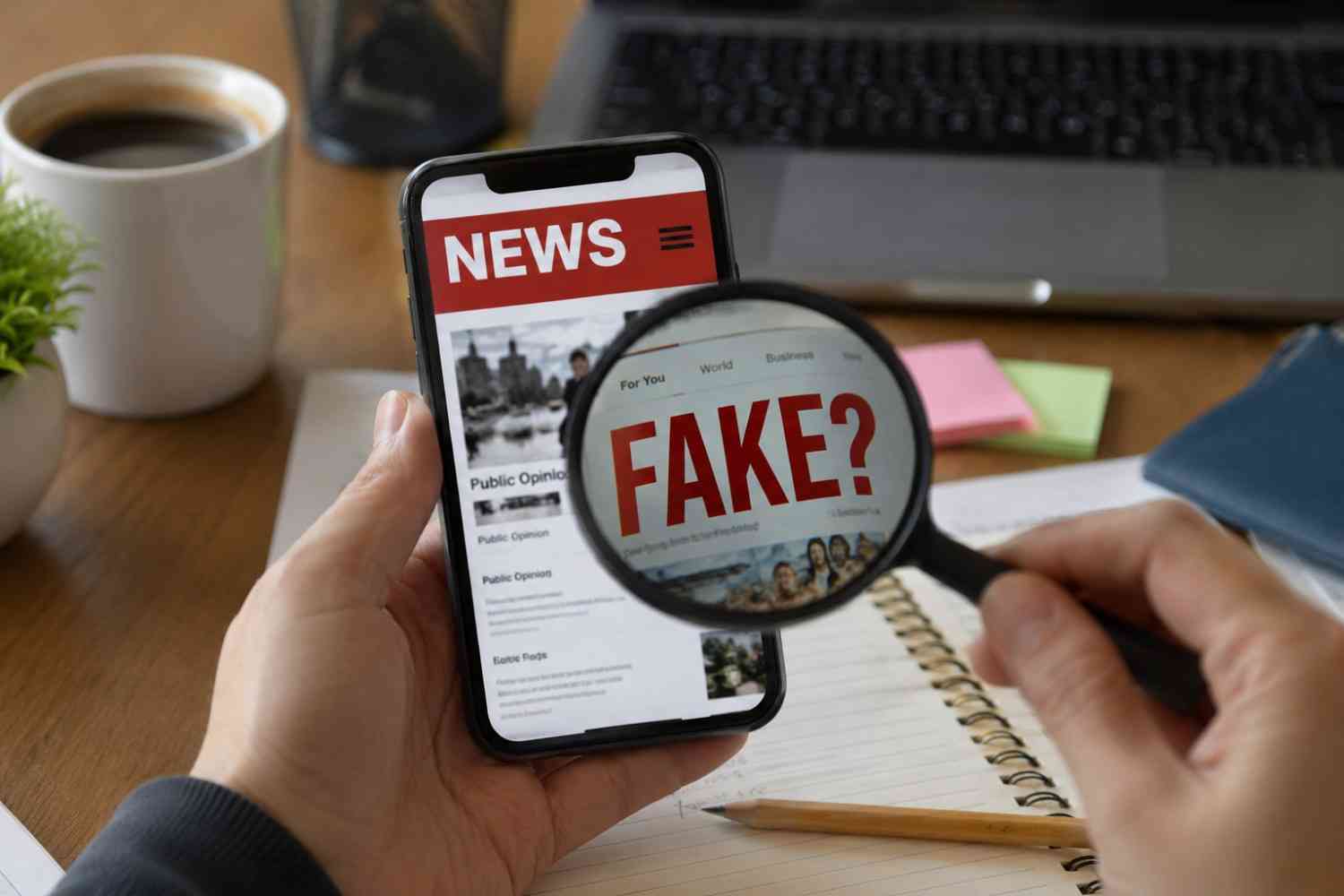
Your phone buzzes. A headline screams that something huge just happened — a disaster, a resignation, a scandal. Your thumb hovers over the share button. Stop right there. That three-second pause is the single most powerful tool you have against misinformation, and most people never use it.
Breaking news moves fast, but truth often moves slower. In the rush to be first, even well-meaning people spread rumors, doctored images, and half-true reports. The good news? You don’t need a journalism degree to check a story properly. You just need a simple system — and this guide gives you one.
Why Breaking News Is So Easy to Get Wrong
When a story is labeled “breaking,” everyone is working with incomplete information, including the reporters. Early details are often wrong, not because journalists are lazy, but because chaos doesn’t come with a fact sheet.
Think about major events in recent memory. In the first hours after a natural disaster, death tolls are almost always inaccurate — sometimes too low, sometimes wildly inflated by rumor. During fast-moving political events, breaking news
screenshots of “official statements” circulate before anyone can confirm who actually wrote them. This isn’t a new problem, but social media has made it faster and louder.
A few forces make breaking news especially unreliable in its first moments:
- Speed beats accuracy. Outlets compete to publish first, sometimes before facts are locked down.
- Emotions override judgment. Shocking headlines trigger fast sharing, not careful reading.
- Bad actors exploit the chaos. Old photos, fake quotes, and satire accounts thrive during confusion.
- Algorithms reward outrage. Platforms often boost the most dramatic version of a story, true or not.
Understanding why early reports go wrong makes it much easier to know what to check.
Step 1: Pause Before You Share
This sounds too simple to matter, but it’s the foundation of everything else. Misinformation spreads fastest in the first hour after a story breaks, largely because people share on instinct.
Before reacting, ask yourself three quick questions:
- Does this headline seem designed to make me angry or scared?
- Am I about to share this only because of how it made me feel?
- Have I actually read past the headline?
Studies on online sharing behavior have repeatedly found that a large share of people share articles without opening them at all. A ten-second pause to actually read the piece stops a huge amount of accidental misinformation before it starts.
Step 2: Check the Source Itself
Not all news sources are equal, and during breaking events, unfamiliar accounts and websites multiply fast.
Look at Who Is Publishing It
Ask these questions about the source:
- Is this a known, established outlet (like a national newspaper or wire service), or an account you’ve never heard of?
- Does the website have a clear “About” page, named editors, and a physical location?
- Is the URL slightly off from a real outlet’s name (for example, a copycat domain using a extra letter or hyphen)?
Fake news sites often mimic real ones with small changes, like swapping “abcnews.com” for a lookalike domain. If something feels slightly wrong about the web address, trust that instinct and look closer.
Check the Account’s History
If the news is spreading through a social media post, click the profile.
- Was the account created recently, right before or during the event?
- Does it mostly post outrage bait, or does it have a consistent history of real reporting?
- Does it have a blue checkmark or verification badge from the platform, and does that platform’s verification actually mean anything anymore (on some platforms, anyone can pay for one)?
A brand-new account with no posting history suddenly “breaking” a major story is a major red flag.
Step 3: Find the Original Source
Screenshots and reposts strip away context. A quote might be edited. A statistic might be outdated. The only way to know for sure is to trace the story back to where it started.
Try this simple process:
- Search the exact headline or claim in a search engine to see who reported it first.
- Look for the primary source — was this from a government statement, an eyewitness, or a press release? Or is it just one account “reporting” what another account said?
- Check the timestamp. Old stories sometimes resurface during unrelated events and get mistaken for new breaking news. A photo from a flood five years ago can easily get reattached to a current storm.
A quick reverse image search can also confirm whether a photo is actually from the event in question or has been recycled from something unrelated.
Step 4: Cross-Check With Multiple Outlets
One outlet reporting something isn’t proof — even reputable outlets occasionally get early details wrong. The real test is whether independent sources are confirming the same core facts.
Here’s a practical way to do it:
- Search for the story on two or three other established news sites.
- Look for outlets with different political leanings reporting the same core facts — if only one side of the spectrum is covering it, be cautious.
- Check whether major wire services are reporting it, breaking news breaking news since these organizations set a high bar for confirmation before publishing.
If only a single account or website is reporting a major claim while everyone else is silent, breaking news treat it as unconfirmed until more sources catch up.
Step 5: Watch for Emotional Manipulation
Misinformation is often designed to feel urgent. Words like “SHOCKING,” “THEY DON’T WANT YOU TO KNOW,” or excessive exclamation points are style choices meant to bypass your critical thinking, not signs of importance.
Genuine breaking news from credible outlets tends to sound careful, not dramatic. Reporters covering real events will often use hedging language like “officials say” or “reports indicate,” because they genuinely don’t have full confirmation yet. If a post sounds absolutely certain about details that would be nearly impossible to confirm within minutes — like a precise death toll moments after an incident — that certainty itself is a warning sign.
Step 6: Check for Corrections and Updates
Good journalism is a process, not a single snapshot. Reliable outlets update breaking stories as facts change, often with a visible timestamp or an editor’s note explaining what changed.
When reviewing a story, look for:
- A “last updated” timestamp near the top or bottom of the article.
- Any correction notices, which are actually a good sign — they show the outlet cares about accuracy.
- Follow-up coverage a few hours or a day later, which usually clarifies early confusion.
If a story hasn’t been updated in hours despite an evolving situation, breaking news it might just be stale rather than false, but it’s worth checking a fresher source before you rely on it.
Step 7: Use Trusted Verification Tools
You don’t have to do all this manually every time. Several free tools can speed up the process:
- Fact-checking sites like Snopes, PolitiFact, and Reuters Fact Check specialize in debunking viral claims quickly.
- Reverse image search tools (like Google Images or TinEye) show whether a photo has appeared online before, and when.
- Wire services such as the Associated Press and Reuters are often the first to confirm major events accurately, breaking news since other outlets rely on them.
Bookmarking two or three of these tools means you’re never starting from scratch when a wild claim shows up in your feed.
A Simple Checklist You Can Actually Use
Next time a big story hits your feed, run through this quick mental checklist:
- Did I read the full article, not just the headline?
- Is the source a known, established outlet?
- Can I find the original statement or footage this claim is based on?
- Are at least two independent outlets confirming this?
- Does the language sound calm and factual, or dramatic and urgent?
- Has this been updated or corrected since it first posted?
If a story fails two or more of these checks, breaking news hold off on sharing it until you find better confirmation.
Conclusion: Be the Pause, Not the Panic
Breaking news will always feel urgent, and that urgency is exactly what makes it risky. The people who accidentally spread misinformation aren’t usually careless — they’re just moving faster than the facts. By pausing for a moment, checking the source, tracing the original report, and confirming it with more than one outlet, breaking news you turn yourself from part of the problem into part of the solution.
You don’t need special training to do this well. You just need a habit. Start using this checklist the next time a shocking headline lands in your feed, and you’ll not only protect yourself from bad information — you’ll help slow it down for everyone around you too
FAQ
How can I tell if a news story is fake within a few minutes? Check who published it, search for the same story on two or three other established outlets, breaking news and look for a clear original source like a government statement or verified footage. If nothing else is confirming it, treat it as unverified.
Why does breaking news often get details wrong at first? Early reporting happens during chaos, before facts are fully confirmed. Death tolls, causes, and details often change as more information comes in, which is normal in real journalism — not necessarily a sign of dishonesty.
Is it safe to trust news I see on social media? Not automatically. Social media spreads information quickly but with little quality control. Always trace a claim back to its original source before trusting or sharing it.
What’s the fastest way to check if a photo is real or recycled from an old event? Use a reverse image search tool like Google Images or TinEye. It will show you when and where a photo first appeared online, breaking news which quickly reveals if it’s being reused out of context.
Should I trust a news source just because it has a lot of followers? No. Follower counts don’t reflect accuracy. Judge a source by its track record, transparency about who runs it, and whether it corrects mistakes — not by its popularity.